Denver · inside the machine
The convection fan motor in a Wolf oven
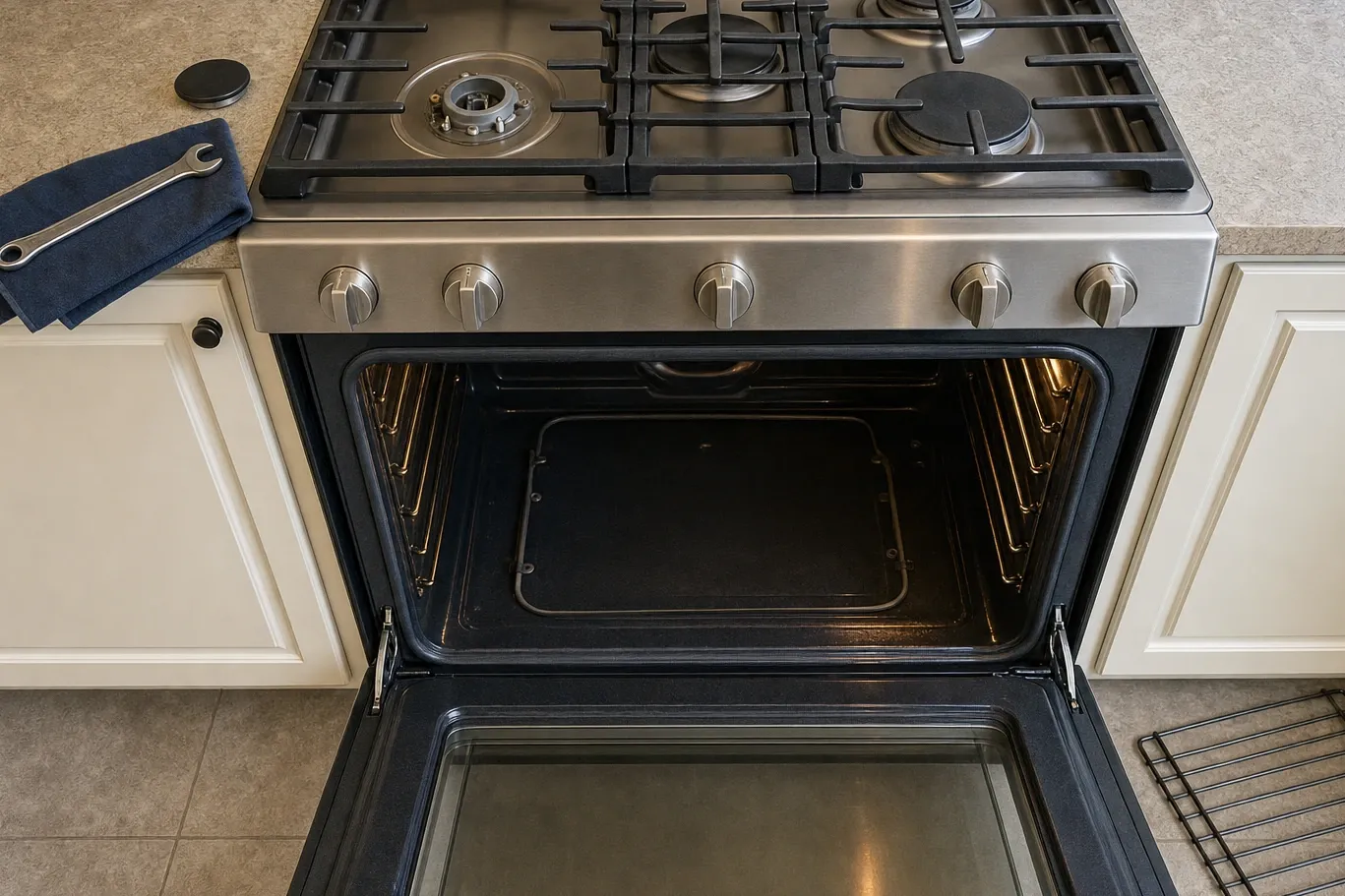
The round perforated disc at the back of the cavity hides the working half of a convection oven. Whatever is behind it spins every time the appliance is used, in dirty heat, for as long as the kitchen lasts.
Bench notes by Desmond Achebe
- Specialism
- Cooking-appliance technician — controls and fault codes
- Bench
- 11 years
- Minutes
- 1
- Filed
This is the part that makes convection convection: it drives heated air across the shelves so several of them cook at one setting. When a bearing goes, the sound arrives months ahead of the failure. Tell Wolf Pro Repair Denver what the oven sounds like cold, hot, and half an hour after switching off, on (720) 649-6641 — those three answers separate this wheel from the cooling one.

What the cover hides
Behind the perforated disc is a fan wheel on a motor shaft, and in a dual convection cavity there are two of them, each with its own heating element wrapped around it. That is the whole trick: air is warmed at the back and thrown forward across the shelves, which is how one setting can be trusted on more than one level, and why a convection cycle browns more evenly than a still cavity manages.
The noise that belongs to something else
Every Wolf oven also carries a fan whose only job is keeping the electronics cool, and it is the one households hear most. It runs while the oven runs and long afterwards, with no set duration published for it — a well-insulated cavity gives its heat back slowly, and the run can stretch into hours. It cannot be turned off either, a safety decision rather than an oversight. So the test needs no tools. A sound that exists only while the oven is heating belongs to the convection side; one that outlives the cooking belongs to the cooling side, and there is nothing there to buy.
Two minutes, no tools
Before you call
-
Listen again with the appliance cold
Switch everything off and leave it until nothing is warm to the touch, then listen. Quiet when cold and noisy when hot points into the cavity; a hum still going an hour after the cooking finished is the cooling side doing its job.
-
Empty the cavity and repeat the preheat
A rack sitting slightly proud of its rail buzzes almost exactly like a worn bearing. Take every rack and tray out, run the same preheat again, and find out whether the noise came with them.
-
Look for anything leaning on the back wall
A baking sheet stood on its edge, or a rack pushed in crooked, can rest on the fan cover and chatter there for a whole cycle. Two seconds of looking settles it.
-
Rule out foil before blaming the air
Wolf attributes uneven browning to a rack lined with foil, which traps heat underneath, and to a pan too large for air to pass round. Clear both before the fan is accused.
If those read normal, the fault is behind a panel and the next move is ours. Wolf Pro Repair Denver, (720) 649-6641.
Asked on the phone about this one
- Is a noisy convection fan safe to carry on using?
- A wheel that whines and still spins is not dangerous, though it rarely improves and gets dearer once the blade or housing has been chewed. The combination worth stopping for is grinding plus uneven heat, because together they say the air is no longer moving as the oven expects.
Falls in the band
Convection fan or motor $300 to $650 parts and labour, agreed in writing before the work starts, with the $89 visit credited against it.
Where this sits on the site
- What it costs to put right Convection fan and motor
- The repair itself Oven Repair
- The rest of the machine All 6 components